
November 2026 – Welcome to this month’s update!
Thank you to everyone who has submitted questions. This month’s newsletter focuses on how the new flood gates will be operated and maintained, along with some of the many measures that our contractor, Jackson Civil Engineering, will implement to help minimise disruption during construction.
We hope you find this newsletter helpful and we’d be grateful if you shared it with friends, neighbours, family members and visitors.
If you have any questions in the meantime, please contact us at langstonecoastalscheme@havant.gov.uk and a member of the team will be happy to help.
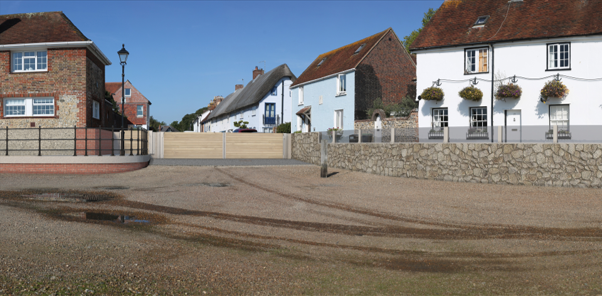
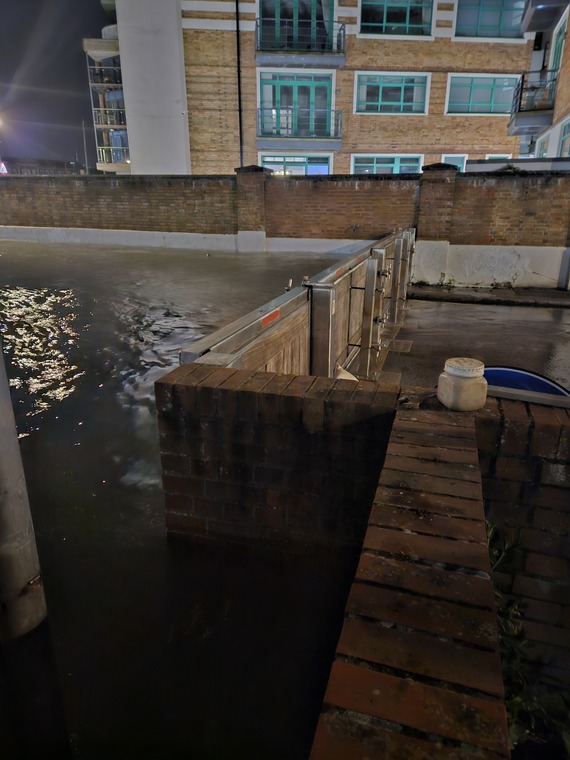
We know that the new flood gates and flood boards are a new feature for Langstone, and that some residents have questions about how they will be operated and maintained in the future.
Coastal Partners has been delivering coastal flood response services across our five local authorities for many years, working closely with the Environment Agency, local authorities, emergency planners and specialist contractors to help protect communities when coastal flooding is forecast.
Our dedicated team of Coastal Incident Officers (CIOs) provides a 24-hour, 365-day response service. Since 2014, a Duty Coastal Incident Officer has been on call at all times to coordinate flood response activities and respond to coastal incidents and emergencies across our areas.
The introduction of flood gates and flood boards in Langstone will build upon these well-established arrangements. Using forecasts, tide information and Environment Agency flood warnings, Coastal Incident Officers will determine when flood protection measures need to be deployed. Working with trained contractors, the team will ensure flood equipment is installed safely and in good time ahead of forecast flood events. Similar operational arrangements are already successfully used for flood defence equipment in communities such as Eastoke and Old Portsmouth, where deployable flood defences have formed part of coastal flood arrangements for many years.
Detailed operating procedures and trigger levels will be developed for each asset as it is installed, ensuring that deployment decisions are based on robust and consistent processes.
Looking after these assets is equally important. Coastal Partners has a dedicated asset management team responsible for inspecting, maintaining and monitoring flood defence infrastructure across our five local authorities. The flood gates and boards installed in Langstone will become part of this programme, ensuring they remain in good condition and are ready to perform when needed.
Together, these arrangements will help ensure the new flood defences continue to provide reliable protection for Langstone for many years to come.
As we continue preparations for the planned start of main construction works in April 2027 we are committed to minimising disruption to residents, businesses and visitors wherever possible. Working closely with our contractor, a range of measures have been incorporated into the construction planning process to help manage traffic, reduce noise and vibration, protect local wildlife and maintain safe access through the works.
Traffic Management
To reduce vehicle movements, deliveries will be carefully managed and consolidated wherever practical. All deliveries will arrive at the main compound before travelling to work areas, allowing teams to be briefed in advance and ensuring sites are ready to receive vehicles efficiently. Dedicated gate personnel will also be in place to manage vehicle movements and give priority to members of the public.
For the temporary junction works, any activities requiring temporary traffic lights will be carried out overnight to minimise impacts on traffic using the A3023 Langstone Road. The majority of planned works are not expected to require temporary traffic lights and will be programmed to minimise disruption wherever possible. For more information on the temporary junction works, please refer to October’s newsletter HERE .
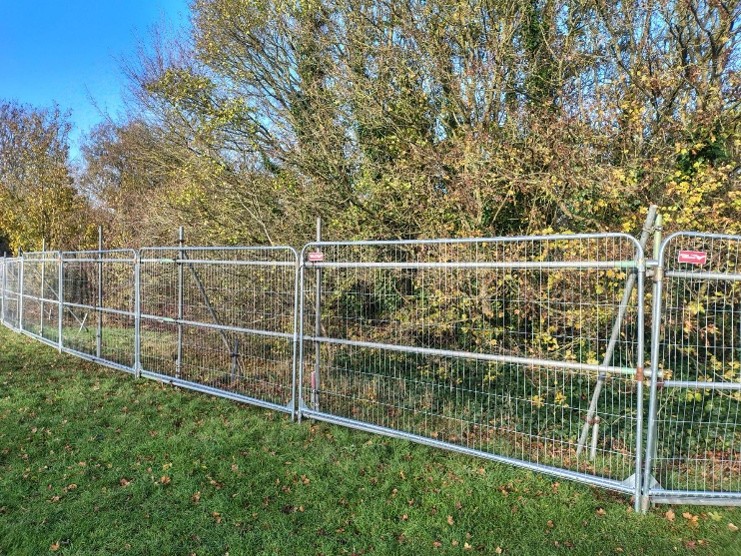
Tree protection fencing will be installed and maintained around retained trees within the construction area to safeguard them throughout the works. Any tree clearance required as part of the project will be undertaken outside the bird nesting season to minimise impacts on local wildlife.
To help minimise any disturbance to birds, seasonal working restrictions are in place. At the egret colony in Langstone Mill Pond, specialist ecological monitoring, known as an Ornithological Watching Brief, will take place throughout works in Frontage 5. If any impacts on the birds are identified, additional measures will be introduced to help protect them.
Ecological safeguards will also be implemented throughout the works, including ‘toolbox talks’ for construction staff and procedures for reporting protected species should they be encountered during construction.
Environmental controls will be monitored throughout construction to ensure compliance with ecological commitments and relevant environmental consents.
To help protect nearby heritage assets, residential properties, utilities and services, we take a range of measures to minimise vibration during construction. These include selecting the most suitable equipment for each activity and avoiding the use of larger machinery than necessary. For piling works, equipment settings are carefully controlled so that only the force needed to complete the work is used, helping to keep vibration levels as low as practicable.
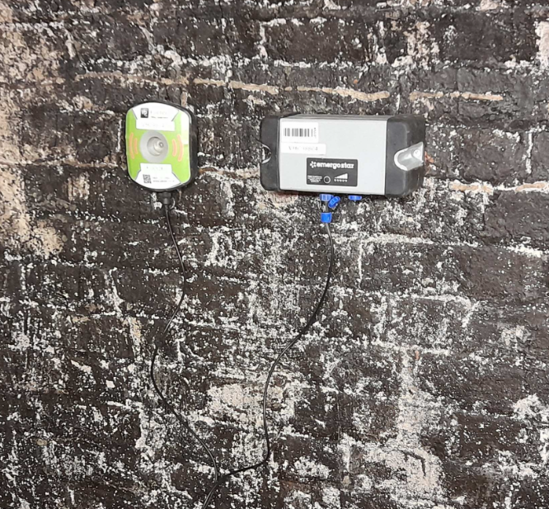
Vibration monitoring equipment will be installed at key locations where higher-vibration activities, such as piling, breaking out and compaction works, are taking place. Property owners affected by this monitoring will be contacted directly before the works begin.
Throughout construction, the monitoring equipment will provide live data on vibration levels, helping us to identify and manage any impacts from heavy machinery and vehicle movements. This enables us to adjust vehicle speeds where necessary and keep vibration levels as low as possible. The system also provides automatic alerts if vibration levels approach pre-set limits, allowing work activities to be adjusted or paused before thresholds are exceeded.
A range of measures will be used to minimise dust during construction. Vehicles transporting materials will be fitted with covers to help prevent dust and debris from escaping during transit and to keep local roads clean. Deliveries will be carefully managed to reduce unnecessary vehicle movements, while construction access routes will be regularly inspected and cleaned as required.
During dry weather, construction access routes and working areas will be dampended down as necessary to reduce dust generated by vehicles and machinery. Wet-cutting methods will be used when cutting stone or concrete and removing existing hard surfaces, helping to prevent dust from becoming airborne.
Reducing Noise
Construction activities will be undertaken within the working hours set by the Local Planning Authority to reduce disturbance to nearby residents, businesses and wildlife. Noisy construction activities shall only take place between 08:00-18:00 Monday to Friday and advance notice will be provided where particularly disruptive activities are required.
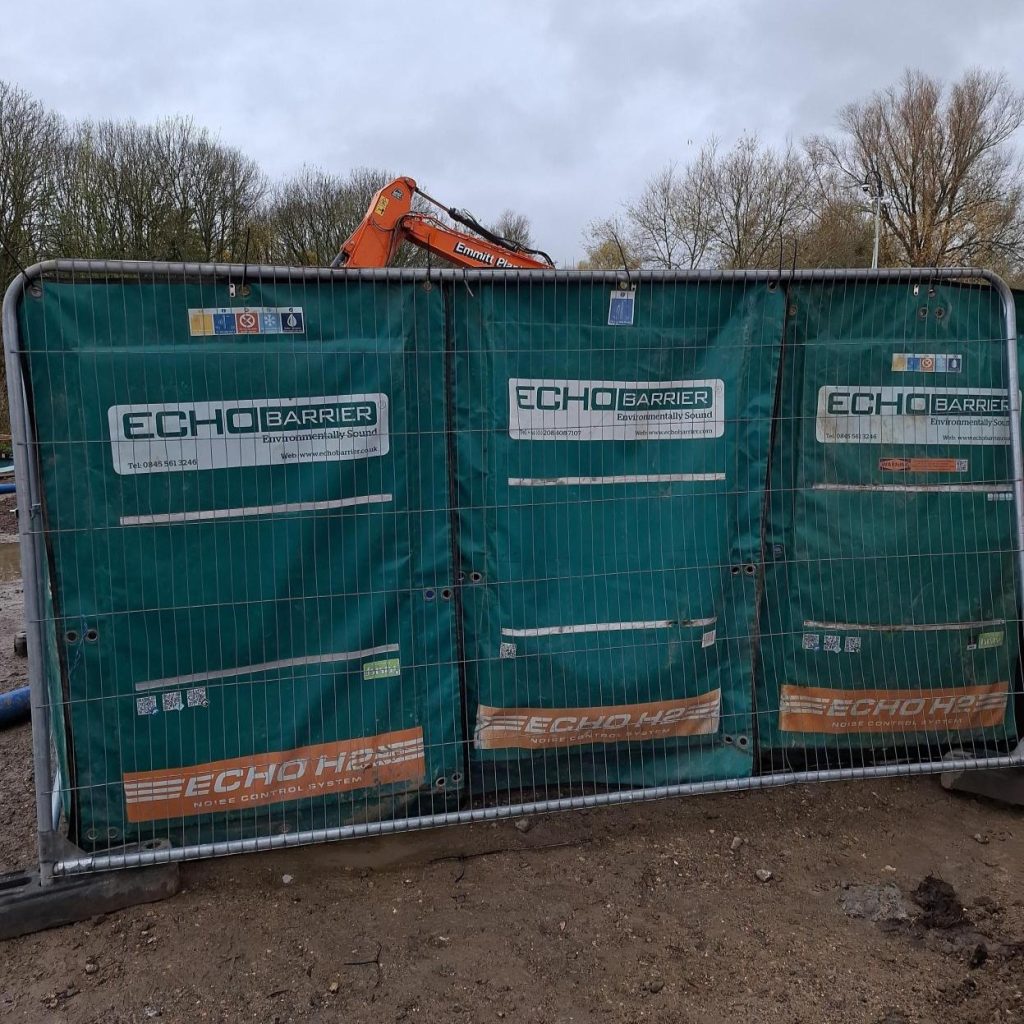
We will monitor noise levels when louder construction activities begin to make sure they remain within the expected limits and that measures to reduce noise are working effectively. Acoustic screening will be installed around key work areas, including locations where cutting, breaking and piling activities are taking place, to help reduce noise for nearby residents and businesses.
All plant and machinery will be fitted with silenced exhaust systems where available, and equipment will be appropriately sized for the task to avoid unnecessary noise. Vehicles and machinery will be switched off when not in use rather than left idling, and battery-powered inverter packs will be used instead of small petrol generators wherever possible.
In addition, to avoid the transmission of noise into the water column, piling activities on the foreshore will only be undertaken over the low tide period when the foreshore is above the current tide level.
We hope these examples provide reassurance about the measures being planned to minimise disruption during construction. We appreciate the continued support and interest shown by the community and will continue to provide updates as we prepare for the start of main construction in April 2027.
Thank you for taking the time to read this newsletter. Please do continue to get in touch with any questions or feedback at LangstoneCoastalScheme@havant.gov.uk.
We use cookies to improve your experience on this website. You may choose which types of cookies to allow and change your preferences at any time. Disabling cookies may impact your experience on this website. You can learn more by viewing our Cookie Policy.
